A hydrogen fuel cell is an electrochemical device that directly converts chemical energy into electrical energy. It uses a fuel (hydrogen) and a comburent (oxygen) to produce water, electricity in the form of direct current and heat.
KERN S&D has its own hydrogen fuel cell technology and extensive implementation experience.
Hydrogen fuel cells have three main elements :
The reactions that take place at each of the electrodes are as follows:
On the anode side, the incoming hydrogen dissociates into protons and electrons. The protons are conducted through the membrane to the cathode, but the electrons are forced to travel through an external circuit (producing energy) as the membrane is electrically insulated. In the cathode catalyst, oxygen molecules react with electrons (conducted through the external circuit) and protons to form water. In this case, the only residue is water vapour or liquid water.
Rated AC power
AC peak power
100 KVA
Rated current
115,5 A
Peak efficiency
55%
H2 inlet pressure
13-16 bar
Dimensions
(LxWxH)
3,0×2,5×2,8 m
Total weight
5.000 kg
Protection level
IP55
Operating temperature
-30 to 60°C
Communication and Interface
Ethernet, Modbus TCP, Relay interface
Security
PE Certificate
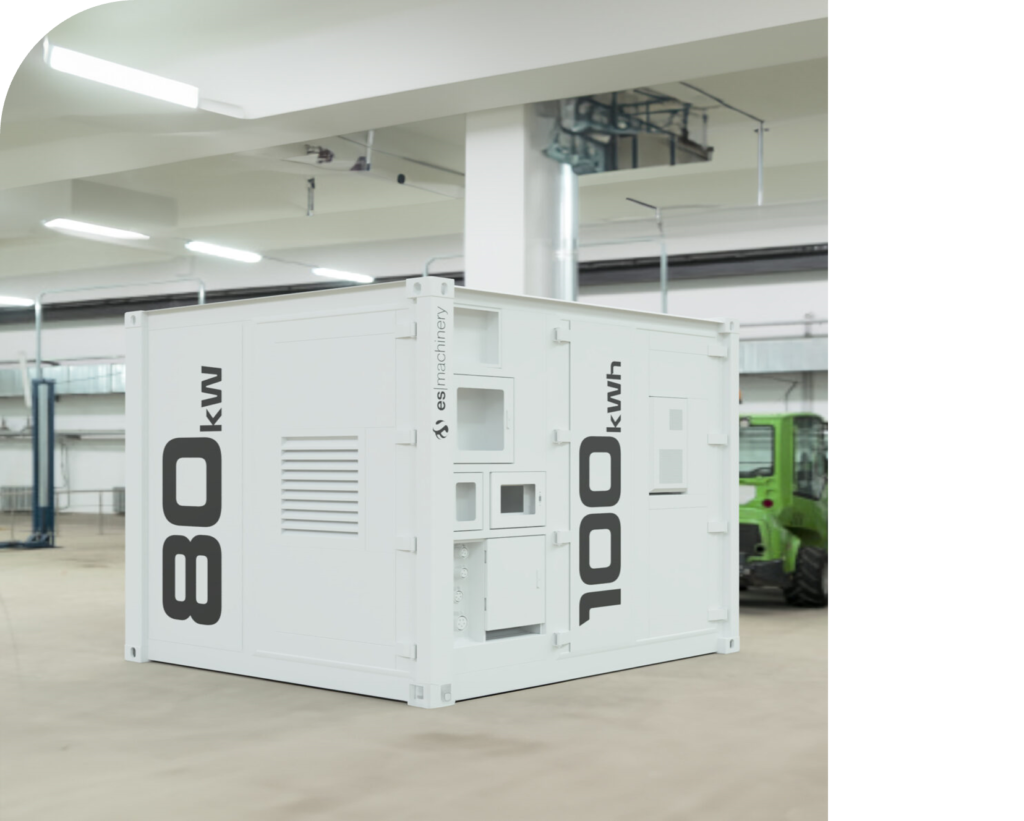
And as power generators in emergencies
1.- Engineering and projects:
2.- Project management:
3.- Assembly, operation and maintenance of plants
KERN SD, through its technical team, operates, manages and maintains third party installations